Kibitsu-jinjya Main Hall
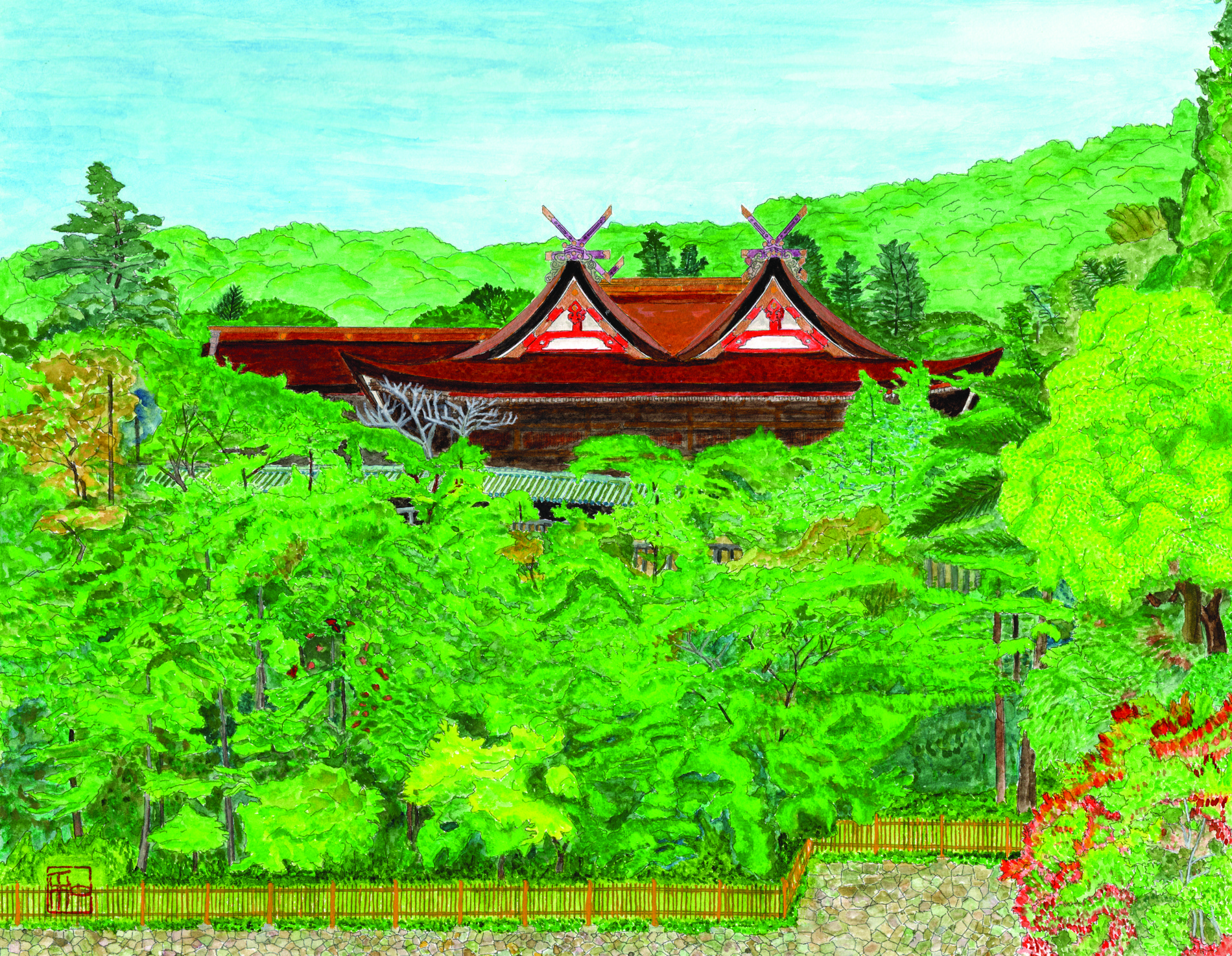
Kibitsu-jinja - Sketch of the Main Hall
The Main Hall of Kibitsu-jinja Shrine is built in a unique architectural style called Hiyoku-Irimoya-zukuri. This style is found nowhere else in Japan, and the building is designated as a National Treasure.
The Main Hall and the Worship Hall were destroyed twice by fire in the past. The present buildings were rebuilt in 1425 during the Muromachi period.
The large roof is thatched with cypress bark (hiwada). It is rethatched once every fifty years.
The photograph used for this sketch was taken on June 6, 2008, after a four-year rethatching project was completed and the temporary roof and scaffolding were removed.
The deep colors of the carefully layered cypress-bark roof, the gentle curves of the irimoya roof, the white and vermilion eaves, and the gold decorations create a solemn and dignified atmosphere. After the surrounding trees were pruned, parts of the Main Hall and the corridor became visible.
I especially like the calm and dignified appearance of the Main Hall, with Mount Rizan as its borrowed scenery.
Snapshot photograph: June 6, 2008, 14:04
Watercolor sketch completed: February 2025
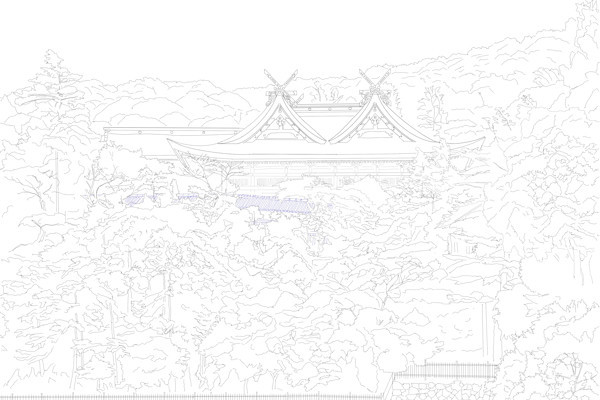
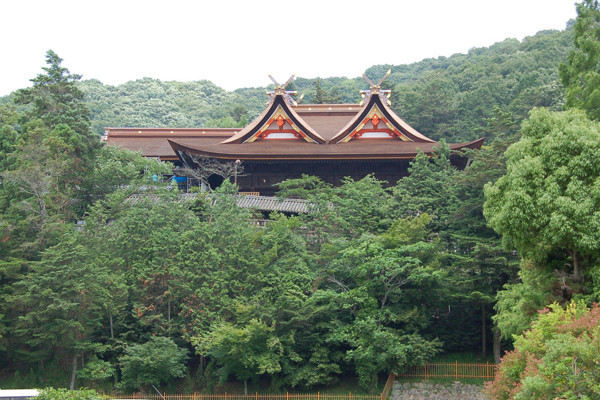
You can download high-resolution line drawings and snapshot photographs. Please feel free to make use of them.
Kibitsu-jinjya Corridor
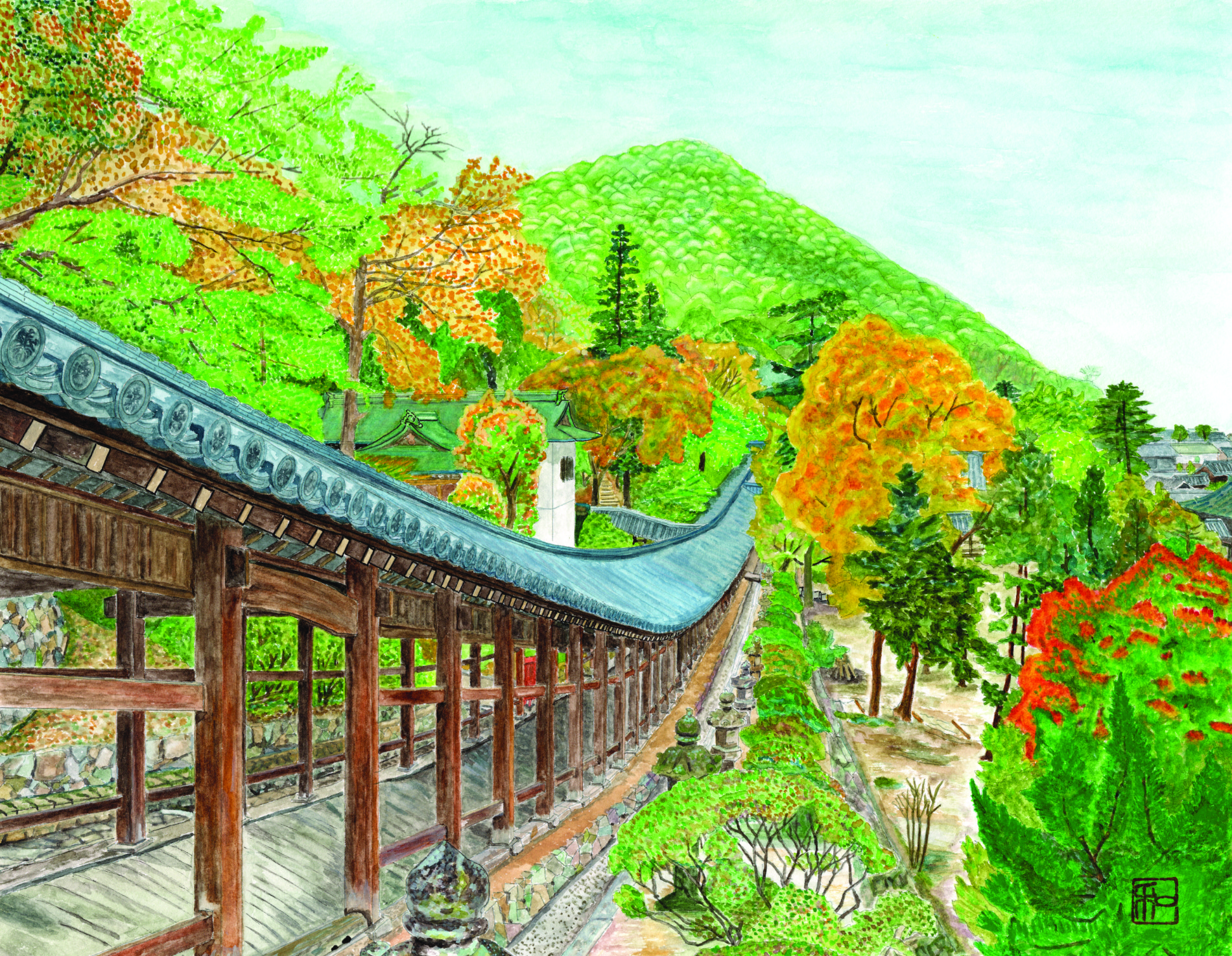
Kibitsu-jinjya - Sketch of the Corridor
The Corridor of Kibitsu-jinja Shrine connects the Main Hall and Worship Hall with several other buildings. These include the South Zuishin Gate, Okama-den, Osonae-den, Hongū-sha, and the former shrine office at the entrance to the Corridor.
The total length of the Corridor is 398 meters. It was constructed during the Tenshō period (1573–1593).
During the Edo period (1603–1868), Miyauchi, the shrine town centered on Kibitsu-jinja Shrine, prospered. At the same time, Itakura, a post town on the Saigoku-Kaidō to the north, was also very lively.
Worshippers used two main routes to visit the shrine. The southern approach passed through the streets of Miyauchi, entered the Corridor beside the former shrine office, and continued through the South Zuishin Gate. The northern approach branched off from the Saigoku-Kaidō and led through a pine-lined path to the North Zuishin Gate.
For this sketch, I chose a photograph taken when the fresh new leaves had fully emerged. The mountain in the background, used as borrowed scenery, corresponds to the tail fin of Mount Rizan, which is said to resemble the shape of a carp.
Snapshot photograph: April 29, 2006, 14:04
Watercolor sketch completed: February 2025
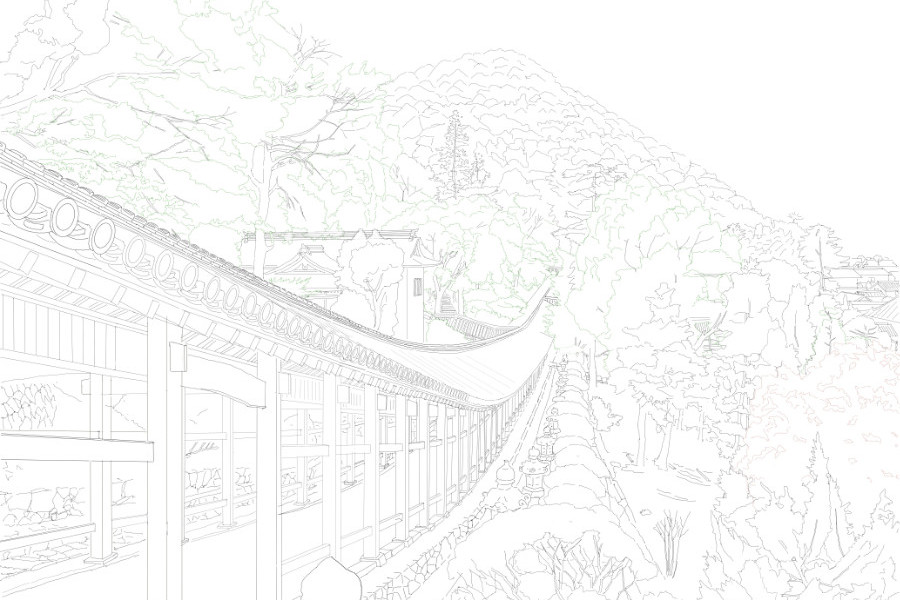
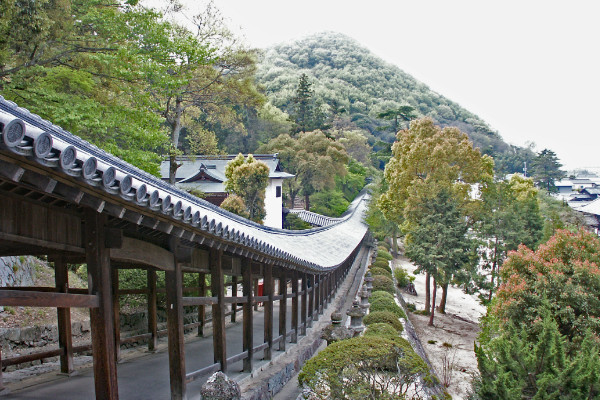
You can download high-resolution line drawings and snapshot photographs. Please feel free to make use of them.
